

Click here for more infos
Cap Tourmente National Wildlife Area
Since 2015, the Tadoussac Bird Observatory (TBO) has set up a migration monitoring station at the Cap-Tourmente National Wildlife Area. These projects are carried out with the financial support of the Government of Canada acting through the federal Department of the Environment and Climate Change.
Quebec’s most diverse ornithological site
The Cap Tourmente NWA is one of the most significant migratory stopovers in Quebec. Indeed, it is renowned to be the province’s “best birding site”, with a list of over 300 bird species. This richness stems from the reserve’s strategic location, at the convergence of the St. Lawrence Lowlands and the Canadian Shield (Laurentian Mountains), and at the confluence of the Fluvial and Maritime estuaries. The national reserve offers a wide variety of habitats, from intertidal to coastal marshes, from agricultural plains to lowland Laurentian forest, and up to mountain boreal forest. This variety of habitats, combined with the reserve’s position along the north shore of the St. Lawrence, which is the most important fall migration corridor in the province, creates an exceptional concentration of birds during migration.
The NWA is also a popular destination for thousands of nature lovers and is an ideal site for the migratory bird interpretation of through banding activities.
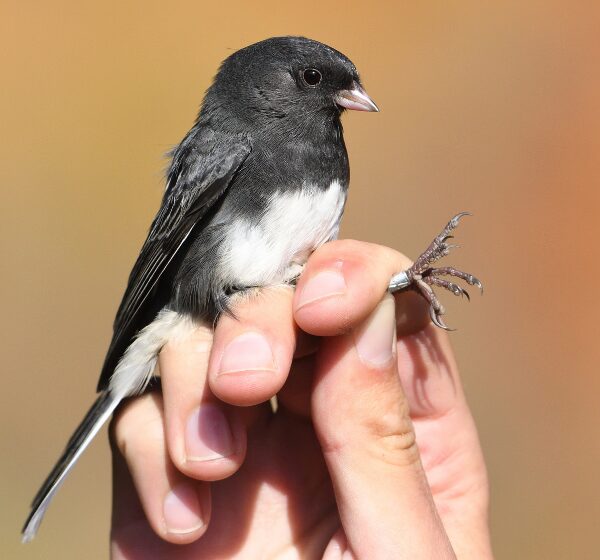
Junco ardoisé - Alexandre Terrigeol
Junco ardoisé - Alexandre Terrigeol
A banding station to monitor migration
Initially operational only in autumn, from mid-September to the end of October, the project has evolved over time, thanks to a contribution from Environment and Climate Change Canada, to ensure effective and sufficient monitoring of the various species. Today, spring migration is monitored from April 23 to June 4, and from August 1 to October 30 in the autumn.
Nets spread around the reserve, near the Léon-Provancher pavilion, capture a sample of migrating birds. Each bird is then identified, banded, measured, weighed and released. These data are then combined with visual surveys carried out on the site, to gain a better understanding of population trends, year after year.
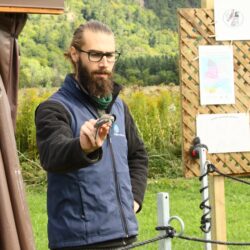
Robert Morin
Bringing Canadians closer to nature
In addition to the migration monitoring program, interpretation is offered to the public. Attended by several thousand people and school groups each year, this project raises public awareness of the migration phenomenon, as well as the role of banding.
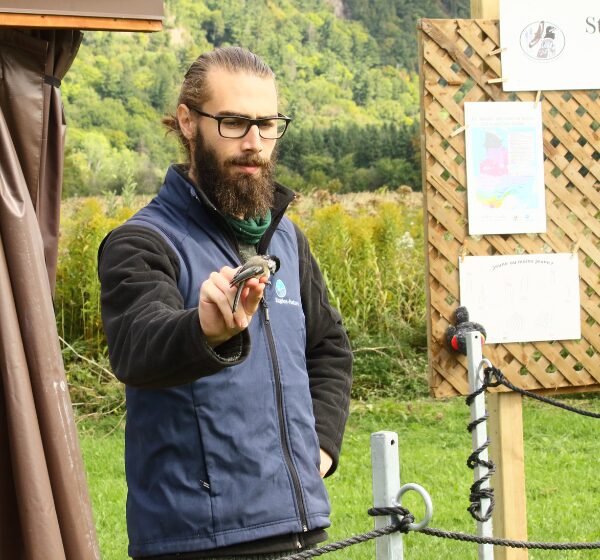
Robert Morin
Recaptures
Although these projects focus primarily on data accumulated during banding (age, sex, weight, measurements), recaptures provide us with important information on the migratory routes used.
Specific projects
Other projects are being carried out at the Cap-Tourmente National Wildlife Area to gain a more comprehensive view of the birds that frequent the area during the summer.
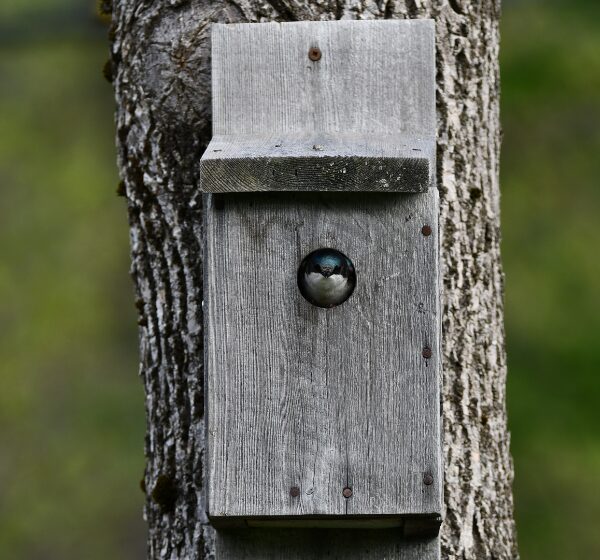
Aerial insectivore nesting monitoring
Starting in 2023, this project aims to acquire more information on the phenology of aerial insectivores, mainly Tree Swallows, as well as on reproductive success.
Monitoring focuses on a network of a hundred nesting boxes distributed throughout the national reserve. Inspected regularly by an experienced ornithologist, the project has already demonstrated its importance, notably by highlighting significant predation.

Monitoring Avian Productivity and Survivorship (MAPS)
The MAPS program is a continent-wide collaborative effort led by The Institute for bird populations to aid the conservation of birds and their habitats through bird banding.
The collection of data used to estimate key demographic parameters – also known as vital rates – such as productivity, recruitment and survival of individual bird species is possible here. This information helps us to better understand possible limits to population growth or the causes of declines.
Cap Tourmente National Wildlife Area, an exceptional site for birdwatchers
Vous voulez nous aider ? Devenez bénévole !
Depuis sa création, la poursuite des différents programmes de baguage de passereaux a été possible du fait de l’implication d’un grand nombre de bénévoles.